The difference in soil conditions between Green Valley and the Anthem area in Henderson Nevada is significant. Clay-rich deposits near Green Valley require geotextiles with high permittivity for filtration, while the coarser alluvium around Anthem demands separation fabrics with higher grab strength. Specifying the wrong geotextile class can lead to clogging under Green Valley's fine-grained soils or tearing in the angular gravels of Anthem. Our geotextile specification service accounts for these local variations from the start, ensuring that the fabric's opening size, permittivity, and tensile strength align with the actual soil profile at each site. We integrate the results of a granulometría analysis and field density tests to calibrate the geotextile selection against the contractor's compaction equipment.
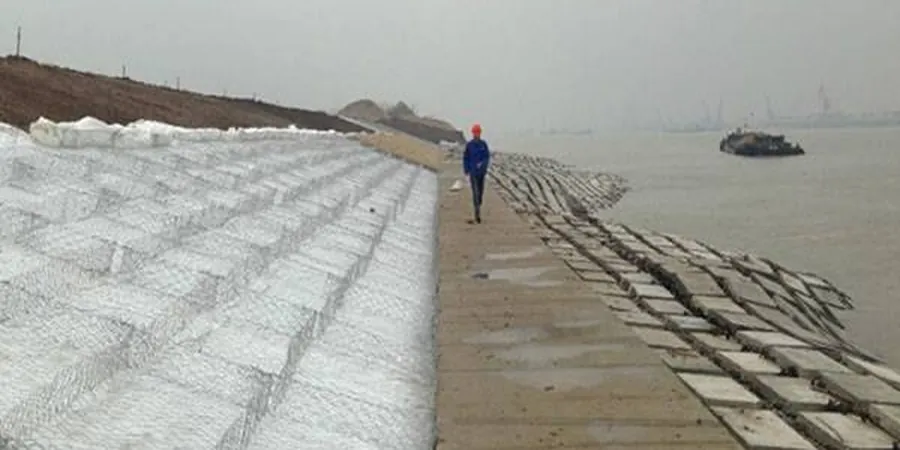
A geotextile specified without site-specific soil data is a gamble; the AOS must match the soil's D85 to prevent clogging or piping failure.
Scope of work in Henderson Nevada
Critical ground factors in Henderson Nevada
Henderson Nevada grew rapidly from the 1990s onward, converting desert alluvial fans and playa lakebeds into residential subdivisions and commercial corridors. Many of these fills were placed with minimal geotextile separation beneath the structural fill. Today, differential settlement and pavement cracking are common where fines migrated into the base course. Without a proper geotextile specification that accounts for the local fines content—often exceeding 30% in the historic wash areas—the separation function fails within a few wet cycles. The result is a weakened subgrade that requires costly over-excavation and replacement. Specifying the correct geotextile upfront avoids this cycle of repair.
Our services
Our geotextile specification service in Henderson Nevada covers the full scope from material selection to construction verification. We tailor each recommendation to the project's soil conditions and load requirements.
Filtration and Drainage Geotextile Design
Specification of nonwoven and woven geotextiles for trench drains, blanket drains, and retaining wall backdrains. We calculate permittivity and AOS based on the actual soil gradation and hydraulic gradient.
Separation and Stabilization Geotextiles
Selection of high-strength woven geotextiles for subgrade separation under roads, parking lots, and building pads. We consider the California Bearing Ratio (CBR) of the subgrade and the construction traffic load.
Reinforcement Geotextile Specification
Design of geotextile-reinforced soil slopes and embankments. We specify long-term tensile strength, creep reduction factors, and interface friction angles using direct shear tests on site soils.
Frequently asked questions
What ASTM standards apply to geotextile specification in Henderson Nevada?
The key standards include ASTM D4751 for apparent opening size, ASTM D4491 for permittivity, ASTM D4632 for grab tensile strength, and ASTM D6241 for puncture resistance. For highway projects, AASHTO M288 provides additional guidance and minimum property values. Our specifications always reference these standards to ensure the geotextile meets both the manufacturer's data and the project's performance requirements.
How much does geotextile specification cost for a typical Henderson project?
For most residential and light commercial projects in Henderson Nevada, the geotextile specification service ranges from US$400 to US$1,150. This includes site-specific soil analysis, material selection, and a written specification report. Larger infrastructure projects with multiple fabric layers and reinforced slopes may fall at the higher end of that range.
Does geotextile type change for clay soils vs sandy soils in Henderson?
Absolutely. For the clay-rich soils common near Green Valley, a nonwoven geotextile with higher permittivity (above 1.0 s⁻¹) is needed to allow water flow while retaining fines. In sandy alluvium found in the Anthem area, a woven geotextile with a smaller AOS (0.150 mm) works better for filtration. The soil's D85 is the primary parameter driving the AOS selection. We always run a full gradation curve before finalizing the specification.