Henderson Nevada sits on the eastern edge of the Mojave Desert, where annual rainfall barely reaches 4 inches and the groundwater table often sits 200 feet or more below grade. This hyper-arid environment produces soils that are predominantly high-plasticity clays (CH), silty sands (SM), and alluvial fan deposits with variable gravel content. Before you break ground on any commercial or residential project here, a precise soil classification (USCS/AASHTO) is essential to predict how these materials will behave under load and moisture changes. The dry crust can mask expansive clay layers that swell dramatically when water is introduced, so we rely on ASTM D2487 and AASHTO M 145 to group soils correctly. Without this classification step, foundation designs risk being either over-conservative or dangerously under-designed for Henderson Nevada.
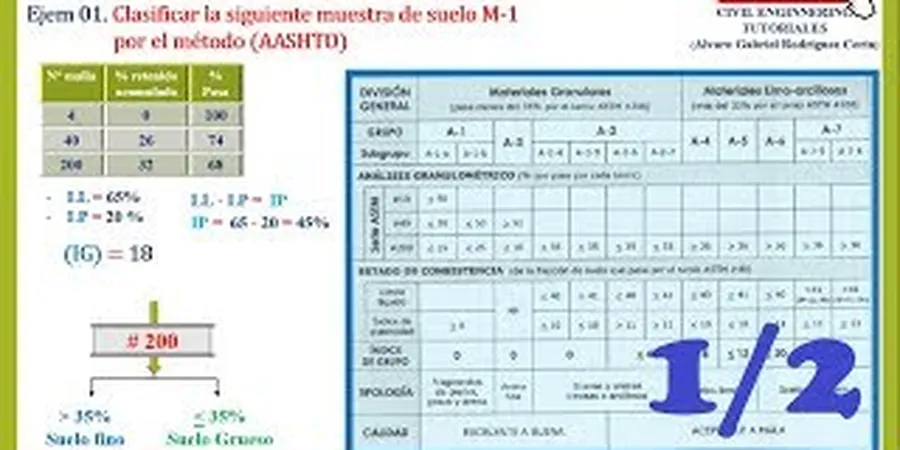
Henderson Nevada clays often show plasticity indices of 25 to 45, placing them in the CH category with high shrink-swell potential.
Scope of work in Henderson Nevada
Demonstration video
Critical ground factors in Henderson Nevada
We use a full set of motorized sieves and a hydrometer bath in our Henderson Nevada lab, processing up to 12 samples per day during peak construction season. The risk here is that a single misclassified sample — especially one that appears sandy but has hidden plasticity — can lead to a pavement design that fails within two years. We mitigate this by running duplicate samples on every fifth borehole and maintaining ISO 17025 accreditation for all particle-size and Atterberg tests. If the soil classification (USCS/AASHTO) shows a PI above 35, we immediately flag it for the structural engineer so they can incorporate moisture control or lime stabilization into the specifications.
Our services
We offer tailored soil classification services for Henderson Nevada that integrate seamlessly with your project schedule. Each service includes full documentation and professional interpretation of results.
USCS Classification with Atterberg Limits
Complete ASTM D2487 classification including liquid limit, plastic limit, and sieve/hydrometer analysis. Delivered with group symbol and group name for every sample. Ideal for foundation design and expansive soil evaluation.
AASHTO Classification for Pavement Design
Group index calculation per AASHTO M 145, with recommended subgrade modulus (Mr) ranges. Directly supports flexible and rigid pavement structural design for roads, parking lots, and airfield projects in Henderson Nevada.
Field Classification & Logging (ASTM D2488)
Visual-manual classification by our field engineers during drilling or test pitting. Includes photographic record, odor check, and dilatancy test. Provides preliminary soil classification (USCS/AASHTO) within 24 hours of sample collection.
Frequently asked questions
What is the difference between USCS and AASHTO soil classification?
USCS (ASTM D2487) groups soils by particle size and plasticity into 15 categories like CH, SM, or GW, focusing on engineering behavior for foundations and earthworks. AASHTO (M 145) assigns a group index from 0 to 20 and classifies soils into 8 groups (A-1 through A-7), emphasizing pavement subgrade performance. For Henderson Nevada projects, we often run both because the USCS classification tells us about shrink-swell risk, while the AASHTO group index directly feeds into the structural number of the pavement section.
How much does a soil classification test cost in Henderson Nevada?
A standard soil classification (USCS/AASHTO) including sieve analysis, hydrometer, and Atterberg limits typically ranges between US$70 and US$90 per sample. The cost may vary slightly depending on the number of samples and whether field logging is included. We provide a fixed quote per sample with no hidden fees for the full ASTM D2487 classification.
Why is soil classification important for Henderson Nevada construction?
Henderson Nevada soils often contain highly plastic clays (CH) that can swell up to 15% when wetted, causing slab heave and foundation cracks. Accurate soil classification (USCS/AASHTO) identifies these materials before construction, allowing engineers to specify moisture barriers, lime treatment, or deep foundations. Without this step, you risk structural damage that costs far more to repair than the initial classification testing.
What sample type is needed for a complete classification?
We require a minimum of 3 pounds (1.4 kg) of disturbed bulk sample for sieve and Atterberg tests, plus an undisturbed tube sample (3-inch diameter) if you need field moisture and density correlation. For pavement design, a representative sample from each distinct soil layer in the subgrade is ideal. We can guide you on sample collection during your Henderson Nevada site investigation.