Henderson sits on a mix of alluvial fans and playa deposits from the Las Vegas Valley. Summer temperatures regularly exceed 105°F, drying surface soils to near-zero moisture. That makes Laboratory CBR test results highly sensitive to preparation moisture — a mistake many teams make. The California Bearing Ratio test measures the load-penetration curve of compacted soil at controlled density and water content. For projects along the I-215 corridor or near Lake Las Vegas, this data drives pavement thickness calculations. Without it, you risk overdesign or premature cracking. A proper CBR run starts with material sieved through a 3/4-inch screen, compacted per ASTM D698 or D1557, then soaked for 96 hours. The swelling behavior in Henderson’s gypsum-rich soils can shift CBR values by 10 points or more. That’s why we combine the test with a plate load test on site to correlate lab-to-field performance.
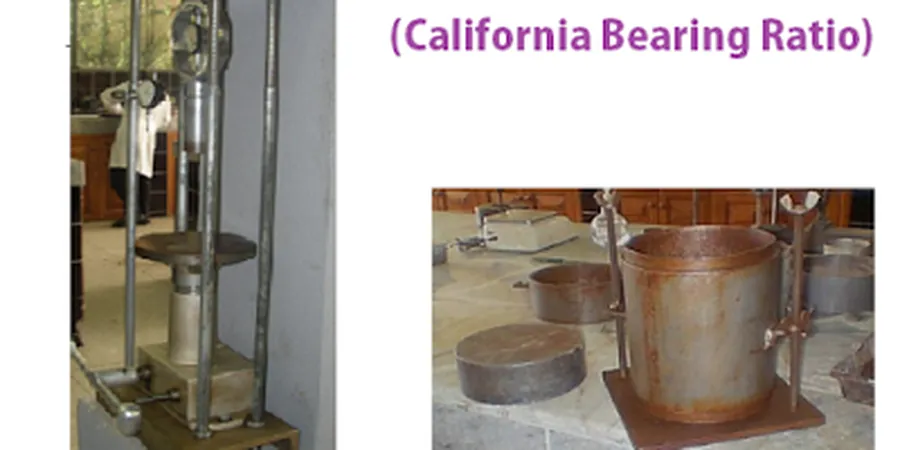
Soaked CBR values in Henderson’s gypsum-rich soils can shift by 10 points from unsoaked, making 96-hour soak mandatory for reliable pavement design.
Scope of work in Henderson Nevada
Critical ground factors in Henderson Nevada
Henderson grew from 16,000 people in 1970 to over 340,000 today. That rapid urbanization pushed development onto marginal land — old lakebeds, floodplains, and collapsible soils. Early subdivisions often skipped CBR testing entirely. The result? Distorted pavements, cracked asphalt, and failed road base within five years. A Laboratory CBR test in Henderson Nevada today is standard practice for any public works project. The city’s Public Works department requires CBR data for all new street designs. Without it, engineers cannot justify a structural section under AASHTO 1993 or the Mechanistic-Empirical Pavement Design Guide. The risk is not just performance — it’s liability. If a pavement fails and the design lacked CBR verification, the geotechnical consultant bears responsibility. Every project in Henderson, from the Lake Mead Parkway widening to the Cadence master plan, now mandates this test as part of the soils investigation.
Our services
We offer two CBR-based services tailored to Henderson's soil conditions and project scale.
Standard CBR for Pavement Design
Full laboratory CBR test on representative bulk samples. Includes compaction at optimum moisture, 96-hour soak, swell measurement, and penetration curve. Suitable for streets, parking lots, and light industrial slabs. Delivered with a summary report and design CBR value at 95% relative compaction.
Field CBR Correlation Program
For large subdivisions or linear projects, we run a series of CBR tests on different material types and correlate results with DCP (dynamic cone penetrometer) readings. This allows rapid field verification during construction. Includes statistical analysis and correlation equations for Henderson soils.
Frequently asked questions
How much does a Laboratory CBR test in Henderson Nevada cost?
The typical cost ranges between US$130 and US$220 per test, depending on the compaction standard (Standard vs. Modified Proctor), number of samples, and whether swell measurements are required. Volume discounts apply for multi-sample projects.
What is the difference between soaked and unsoaked CBR?
Unsoaked CBR measures the bearing ratio at as-compacted moisture. Soaked CBR submerges the sample for 96 hours to simulate saturation after rain or irrigation. In Henderson, where gypsum-rich soils can swell, the soaked value is often 30-50% lower than unsoaked. Design should always use the soaked value.
Can I use CBR results from a nearby city for my Henderson project?
Not reliably. Henderson soils vary widely — from silty sands near the Pittman Wash to cemented gravels along the McCullough range. CBR is highly dependent on gradation, plasticity, and density. Using data from a different location introduces unacceptable uncertainty. Site-specific sampling is required.
What sample quantity is needed for a Laboratory CBR test?
You need approximately 60 to 80 pounds of representative material. The lab sieves out oversize particles, splits the sample for moisture content and compaction, then prepares multiple molds. For projects with multiple strata or material types, plan one sample per distinct soil layer.