A common mistake we see contractors make in Henderson Nevada is assuming the alluvial fan deposits behave like uniform sandy soil. That assumption leads to under-designed walls in the caliche-cemented layers and over-estimated lateral pressures in the loose fills near the Las Vegas Wash. The key variable is the cemented caprock that sits above the deeper granular strata — it changes both the active wedge geometry and the drainage response. Without a proper subsurface profile, the lateral earth pressure coefficients you plug into Rankine or Coulomb theory might be off by 30% or more. That is why we always run a dilatometer test to measure in-situ stiffness and a consolidation test on the finer lenses before finalizing the wall design parameters.
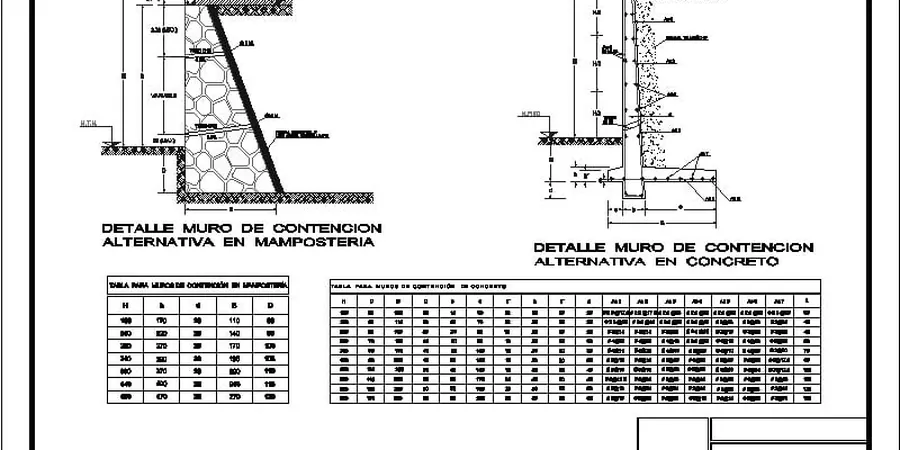
Lateral earth pressures in Henderson's cemented alluvium can be misestimated by over 30% without in-situ stiffness data from dilatometer or SPT-N correlations.
Scope of work in Henderson Nevada
Demonstration video
Critical ground factors in Henderson Nevada
Henderson Nevada has grown rapidly since the 1990s, pushing development into areas with collapsible soils and shallow groundwater near the wash. The historic alluvial terraces contain layers that can settle several inches when wetted, which is a direct threat to any retaining wall that relies on passive resistance from the toe. If the toe soil collapses under saturation, the wall rotates forward and the stem cracks. We have seen walls built on undocumented fill that failed within two years because the drainage system was omitted. For this reason, each retaining wall design in Henderson Nevada must include a site-specific infiltration test and a collapse potential assessment on the foundation soils.
Our services
Our team provides a full suite of services to support retaining wall design in Henderson Nevada, from subsurface investigation to final structural recommendations.
Subsurface Exploration & SPT Borings
We drill borings to depths of 20 to 40 feet using hollow-stem augers, logging soil types and performing SPT at 5-foot intervals. The N-values are correlated to friction angles and unit weights for the wall design.
Seismic Lateral Earth Pressure Analysis
Using ASCE 7-22 site-specific response spectra and the Mononobe-Okabe method, we calculate the pseudo-static seismic increment for walls taller than 6 feet. This is critical in Henderson's moderate seismic zone.
Drainage & Waterproofing Design
We specify weep holes, gravel drains, and geocomposite sheets to keep the backfill dry. A full hydrostatic pressure analysis is included to ensure the wall stem is not overstressed during wet years.
Frequently asked questions
What is the typical cost range for retaining wall design in Henderson Nevada?
For a single wall up to 10 feet tall, the design fee including field investigation and reporting ranges from US$1.040 to US$3.850. Larger walls or multiple walls increase the cost, and complex sites with cemented soils or high groundwater may add to the scope.
What soil conditions in Henderson Nevada most affect retaining wall design?
The biggest challenge is the cemented caliche layer that can be up to 5 feet thick near the surface. It behaves like weak rock but can have voids and fissures that cause erratic lateral pressures. Below that, loose silty sands and gravels are common. We always classify the soil using the Unified Soil Classification System (ASTM D2487) and run a collapse potential test on the finer lenses.
Do I need a seismic analysis for a retaining wall in Henderson?
Yes. Henderson is in Seismic Design Category D per IBC 2021, with an SDS of 0.33g for Site Class D. Any wall taller than 6 feet must include a pseudo-static seismic increment using the Mononobe-Okabe method. The wall stem and footing must be checked for overturning and sliding under the combined static plus seismic load.