Henderson sits on deep alluvial fan deposits from the McCullough Range, with silty sands and gravels extending over 150 meters in places. The shallow groundwater table, sometimes just 3 to 5 meters deep near the Las Vegas Wash, introduces drainage challenges that directly impact subgrade stability. For road projects crossing these deposits, uncontrolled water migration can cause erosion, pavement pumping, and loss of bearing capacity. Effective geotechnical road drainage in Henderson Nevada requires careful assessment of infiltration rates, perched water zones, and seasonal runoff patterns. We complement this analysis with infiltration testing to quantify hydraulic conductivity in unsaturated conditions.
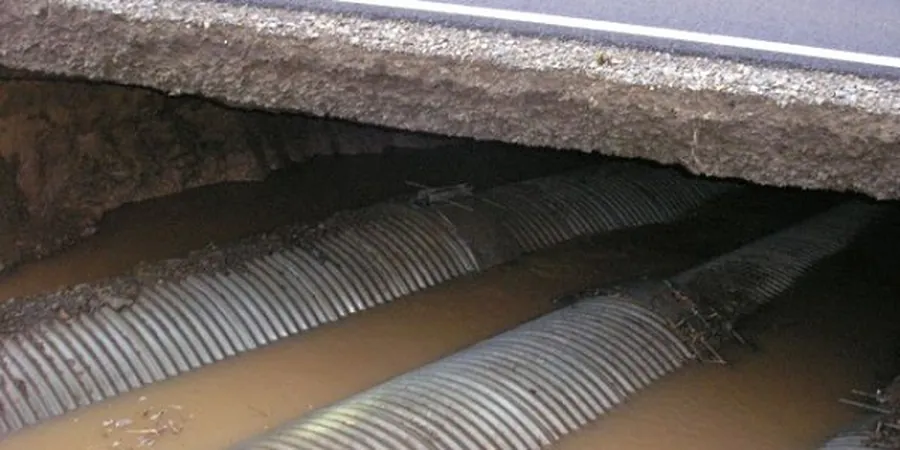
Alluvial fan deposits in Henderson can transmit stormwater quickly, but clay interlayers create perched water tables that require targeted drainage design.
Scope of work in Henderson Nevada
Critical ground factors in Henderson Nevada
Henderson receives roughly 4 inches of rain annually, but summer thunderstorm intensities can exceed 1.5 inches per hour. The city’s elevation ranges from 1,300 to 2,000 feet, with steeper slopes in the Anthem Hills area. Without proper geotechnical road drainage in Henderson Nevada, concentrated runoff scours road shoulders and saturates the subgrade, increasing the risk of alligator cracking and differential settlement. We use the Rational Method and site-specific infiltration data to size drainage systems that match local hydrology.
Our services
We provide a full scope of drainage-related geotechnical services tailored to Henderson's terrain.
Subdrain Design and Installation
Perforated pipe systems placed below the road base to intercept groundwater and lower the phreatic surface, preventing capillary rise and frost heave.
Edge Drain Systems
Trench drains along pavement edges with filter fabric and clean aggregate, designed to capture surface infiltration and direct it to outfalls.
Permeability and Infiltration Testing
In-situ falling head and constant head tests to measure hydraulic conductivity at depth, ensuring drainage layers perform as modeled.
Frequently asked questions
How does alluvial soil affect road drainage in Henderson?
Alluvial deposits in Henderson Nevada consist of interbedded sands, silts, and gravels with occasional clay lenses. The sandy layers drain readily, but clay interbeds create perched water tables that require interception drains to prevent subgrade saturation.
What is the typical cost for a geotechnical road drainage study?
A standard drainage assessment for a road project in Henderson ranges between US$860 and US$2,160, depending on the number of test pits, infiltration tests, and the complexity of the drainage design.
Do I need a drainage plan for a new subdivision road in Henderson?
Yes. Henderson's flood control regulations and Clark County drainage criteria require a geotechnical drainage evaluation for new roads. Without it, you risk pavement failure, erosion, and permitting delays.
What tests are used to design road drainage in desert soils?
We typically run field infiltration tests (ASTM D3385), grain size distribution (AASHTO T-88), and Atterberg limits on the subgrade. These data feed into the drainage layer thickness and pipe sizing calculations.